
TANKIE'S WILDLIFE ANIMALS


The domestic kitty cat is like wild cats in some ways. They purr, hiss, and use their claws and body to fend off aggressors. They sleep alot, and usually eat once or twice a day.
Their quick and agile, and can run very fast when motivated. And, when they are young, they are sooo cute!
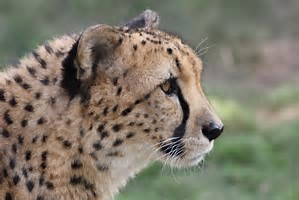
The Cheetah is smaller in size compared to most wild cats. Their lengthy legs and slender body allow them to run very fast, and they can reach top speeds of 120km. Their long tails and non retractable claws allow them to maneuvre effectively while hunting.
Cheetahs can purr like a domestic cat, however they cannot roar. Cheetahs look similar to leopards but Cheetahs have distinguishable 'tear marks' at their eyes to nose.
The Cheetah cat is found in areas of Africa, and are now considered a vulnerable species due to their diminishing population.
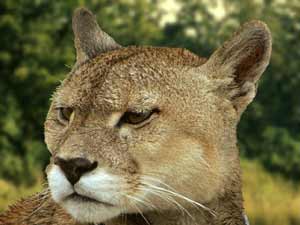
The Panther is a wildcat found in Asia, Africa, America. There is a white panther and a black panther, and panthers are actually Jaguars or Leopards.
Jaguars can be “melanistic", where they appear almost black. Melanistic jaguars, and also leopards, are known as “black panthers”.
Panthers are great hunters and can leap 20 feet in the air and run to 35mph. They like to hang in trees to watch their surroundings and hunt for food. They typically live to 15, and longer if in captivity. Like Lions, they can roar. They are an endangered species.
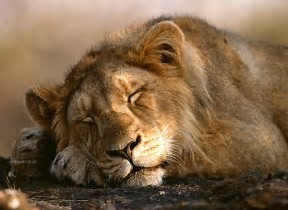
The Lion is the second largest wildcat and the males can be up to 7ft in length(excluding tail), weighing up to 500lbs. Like other big cats, they can run fast for short distances, and can leap 20- 30 feet.
The male lion is distinguished by his mane which can cover around the face, neck, and chest.
Lions group with other lions usually in average pack of 15,(the 'pride") to hunt or share a meal. They spend two to three hours a day hunting. Their hunting territory can be 20 square km up to 400 square kilometers depending on the abundance of food. They claim their territory by scent marking, and by their roar. Lions roar in the evening before their nightly hunt, and at day break. In groups, female lions do most of the hunting, while males protect the pride.
They reside now in Sahara of Africa, and are a vulnerable species. Typically, lions live to 10 years, and to 25 years in captivity.
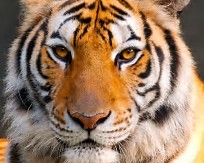
The Tiger has a muscular body with a large head and paws, and mostly black or brown vertical stripes on its' orange fur, with those on the limbs and forehead being horizontal. No two tigers share the same markings.
They do not purr, and show contentmemt by closing or squinting their eyes. Unlike most big cats, tigers like water and enjoy swimming and bathing. Is the world's largest wildcat, and has the largest cat roar which can be heard to 3 km. Common is the Bengal and Siberian tigers.
Females are typically smaller than males. Tigers live to 20 years and to 26 in captivity. Tigers are an endangered species.
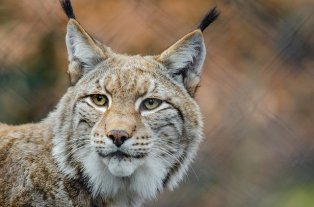
The Lynx is a wildcat species that includes; Iberian, Eurasian, Canada Lynx, Bobcat. Iberian and Eurasian lynx are found in Europe and Asia, while the Canada Lynx and Bobcat live in Northern Canada and Northern USA.
The largest lynx - Iberian, can weigh to 60 pounds, making these wildcats much smaller than Tigers and Lions, who can weigh from 450 to over 700 pounds. The lynx have excellent hearing and are skilled night hunters.
Because they cannot run fast they wait for prey to come there way.
They are distinguished by their short tails, tufted ears, and fury padded feet. Typically, they live in the wild to 15 years.
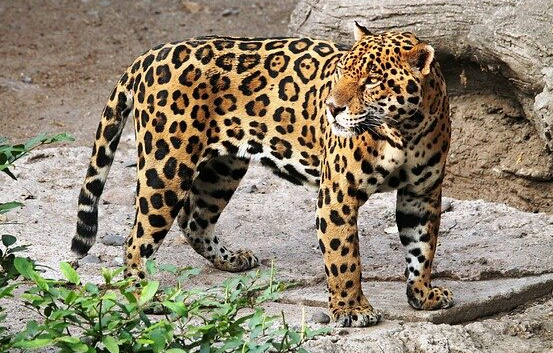
The Jaguar is a wildcat mostly found now in the Amazon rainforest and the Pantanal, which is the largest tropical wetland. They are an endangered species.
Being the third largest wildcat, they like water, and often live near lakes, rivers, and wetlands. Unlike most big cats, females and males both can roar.
They hunt day and night, and use their mighty bite to kill their prey. Unlike other wildcats who usually lunge at the throat of their prey, the jaguar can use one bite to the skull of an animal to kill them.
Jaguars can vary in weight depending on the region. Those living in Pantanal tend to be the largest, to 120kg for males, while those in central Amercica much smaller, to half the size.
Compared to leopards, Jaguars have larger, rounded heads and short legs with a long tail. Although their markings are similar to a leopard, they are actually more intricate, with smaller detail contained in their body spots.
The word Jaguar is from the word 'yaguar', and means...'he who kills with one leap'.
Free Photo Courtesy of Sch, at Pexels.com
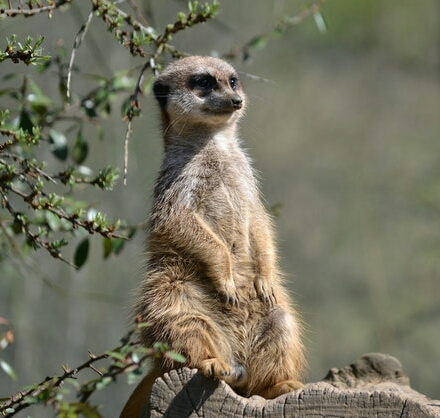
The Meerkat is a social animal that lives in groups, typically 10 - 30 meerkats, and digs elaborate borough tunnels which can be 16 feet in diameter and include several levels. Because of their high energy, it is common for a meerkat to dig 100s of tunnels in half a day, and dig their own bodyweight in a few seconds. They can run 32 km per hour.
They are catlike carnivores. Interestingly, meerkats can survive without water, and hydrate their body by eating melons, fruit, tubers, and roots.
Their facial features include flat ears and black patches around their eyes. Their body is long with coat colors being silver, orange, gold or brown.
They usually gather food early in the day when they leave their boroughs. Some fetch food, others sunbathe, while others stand guard for predators. Because they are able to stand on their hind legs, they can easily observe their surroundings.
The meerkat lives in the southern regions of Africa. They are not an endangered species, and there are 500,000 in existence.
Free Photo Courtesy of Nguyen, at Pexels.com
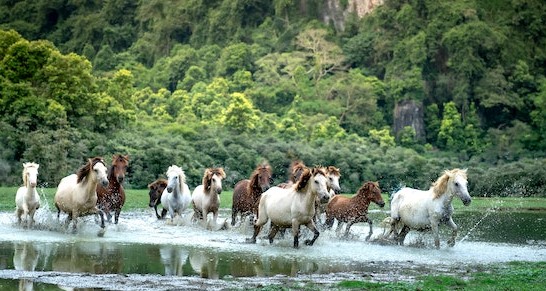
The Horse is a very common animal and there are millions around the world. Although wild horses are extinct, some domesticated wild feral horses still roam in regions of the world like the midwest USA.
Horse business is big business, with horse shows, horse racing, horse betting, horse breeding, and other activities providing a 40- 100 billion dollar industry. Horses are also used for search and rescue.
There are more than 150 horse breeds, and different breeds can range drastically in size. Small horses, aka - Miniature Horses, are the smallest of the breeds, measuring under 3 ft. tall at the shoulder, and weighing around 200 lbs. The largest breed is the Shires, standing nearly 6 ft. tall and weighing up to 2,400 lbs.
Horses eat plant food and are herbivores. They mostly eat grasses while roaming their land; and can also eat pelleted food and hay. They graze throughout the day instead of eating planned meals. In a day, a horse can eat up to 20lb of food.
Their vision is excellent, with 350 degrees of visual thanks to the position of their eyes moreso on the side of their heads.
Horses can sleep standing or laying down, and they can gallop pretty fast also, with speeds in excess of 30mph with race horses topping 40mph. The common lifespan of horses is 25-30 years.
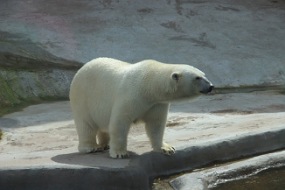
Photo Courtesy of: Ирина Гиязова
The Polar bear, aka Ice Bear/White Bear, is a wild animal living in the Artic regions. Its' stocky looking body can weigh up to 1,600 pounds for males and females much less. The polar bear is the largest and most powerful carnivore on land. Another bear known as the Kodiak bear, also carries the same distinction.
Polar bears have insulated pads on their feet with claws which help them grab ice and kill their prey. They can travel on ice islands for miles over desolate terrain. They are excellent swimmers diving under water to catch their prey. Interestingly, they swim by using only their front legs. Their diet consists mostly of seals, however, they do eat berries, dead animals, and have been known to eat garbage near settlements. They have no fear of humans which makes them especially dangerous.
Baby polar bears, which can weigh less than 1kg, stay close to the female polar bear, and don't wander off on their own for a good two years.
Polar bears can live for 30 years in the wild, and to 35 years in captivity. They are an endangered species, in part because of global warming. It is said that by 2050, the polar bear population will be reduced by a third.
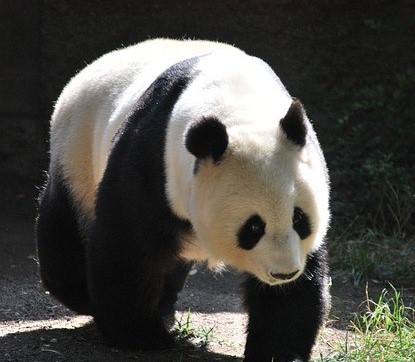
Photo Courtesy of: Pixabay.com
The Panda Bear aka the Giant Panda, is a large wild animal who lives in SouthWestern China. There are many Panda Bears in zoos around the world, mostly due to their immense popularity. Their lifespan is 20 years in the wild and 30 while living in a zoo or captivity. The Giant Panda is a unique creature for a number of reasons. The most obvious is their obsession with eating bamboo. They love bamboo and eat it for 12 or more hours per day to get enough nourishment for themselves. They eat a mixture of bamboo types, all of which gives them plenty of protein ,carbs, and vitamins and minerals. They also eat small amounts of fish, fruit, and vegetables.
Given that bamboo contains the poison cyanide, it's quite interesting that the Panda bear can eat it raw without issue, In fact, their body can absorb and neutralize about 80% of the poison contained in the bamboo. For human consumption, the poison in bamboo can be destroyed by discarding the outer layers and then boiling the bamboo that is edible.
Pandas by nature are shy compared to other bear species, however, they thrive on having a good time, be it rolling around in the snow, swimming, or climbing trees. Pandas do not hibernate like other bears, in fact, they cannot sustain themselves for the duration of time required to hibernate because of their low fat reserves. They can't afford to hibernate because they are too busy eating bamboo!
Fur shedding is another uniqueness to the Panda. Unlike most animals Panda's don't shed at a certain time of year, instead, their fur sheds on a continuous cycle. This gives them a patchy look at times, leading one to think they are not well, but this is not the case. It's simply their way of cycling out their fur.
Female and male pandas have differences in weight, with the male weighing more, usually around 275 - 300 pounds, and the females in the 200 pound range. They mate not unlike other species, except for the gestation period, which is short, which produces small cubs, only about 6 inches and weighing 4 oz on average. Cubs are weaned around 18 months, and spend their early weeks and months very close to their panda mother.
Pandas are considered a National Treasure in China, and laws have been in place for some time to protect the once endangered species. They are now a 'vulnerable' species, with approximately 1800 in existence mostly in China's protected regions. Another 600 are living in zoos around the world, some in exchange programs with China. In USA, zoos in DC, Atlanta, and Memphis have panda bears.
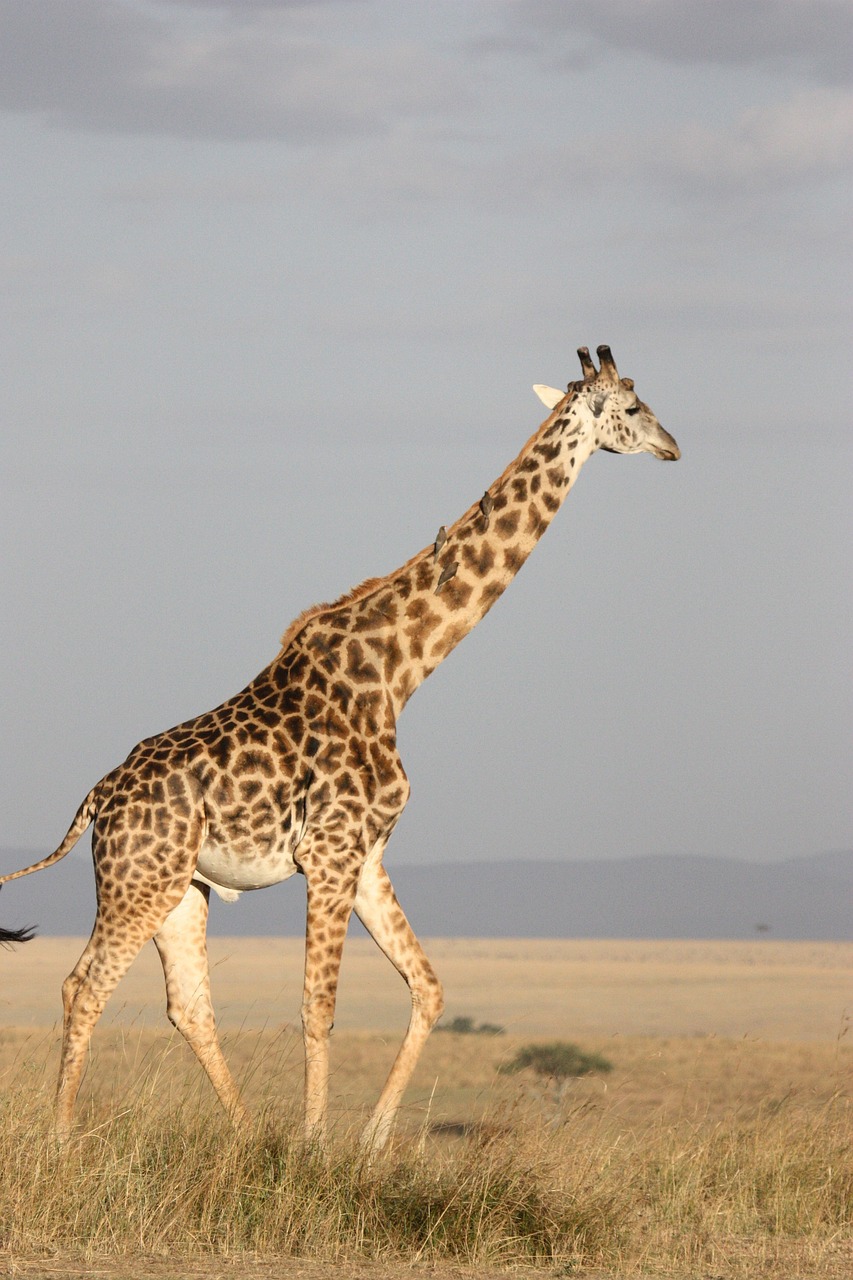
Photo Courtesy of: zgmorris13 at Pixabay
The Giraffe, lives now mostly in Africa, with many in captivity in zoos around the globe. Their lifespan is 25-30 years, and, like most wild animals, a longer life while in captivity.
The most unique feature of giraffes are their spots and their height. No two giraffes share the same spot pattern. The spots also provide camouflage in the wild, and they also serve to cool the giraffe by helping to release heat, thus maintaining body temperature.
They are the tallest of wild animals with heights up to 18.7 ft, and neck length of up to 7.9 ft. Their body weight can be approximately 4000lbs for males and 2500lbs for females. Giraffes can run pretty fast, up to 37mph, on a short jaunt, and 31mph for a longer run. Unlike many wild animals giraffes are not predators, and they eat mostly plant foods from trees and plants. They can also nourish themselves by eating carcass bones, as this helps to maintain their calcium and protein. Giraffes eat up to 75lbs of food per day. They get some of their water from their plant based diet, but overall, they don't need a lot of water and can survive by drinking it every few days.
Not known as a big sleeper like some wild cats, the giraffe can get by on as little as four hours sleep a day. While living in small groups, they travel within a limited area based on the terrain (32sq miles wet terrain/580sq miles dry) to get their food. Their long necks are used to fetch their food, and in friendly combat with other giraffes. With their long, almost 20 inch tongue, they can fetch a good variety of plants, and their super tall body can reach the tops of many trees.
Although their legs are quite slender, they use them along with their heavy body to easily stomp upon and discourage their predators. The bottom of their hoofs are quite large, which keeps them from sinking into the sand.
New born giraffe (aka calves) can weigh to 100kg, and are up walking within the first hour of birth. Young giraffes are at their full height by their fourth year, however, they can continue to gain weight until their eighth year. Most giraffes are now endangered or a vulnerable species. There are approximately 100,000 in Africa, in the wild and animal reserves, with limited numbers in zoos around the world.
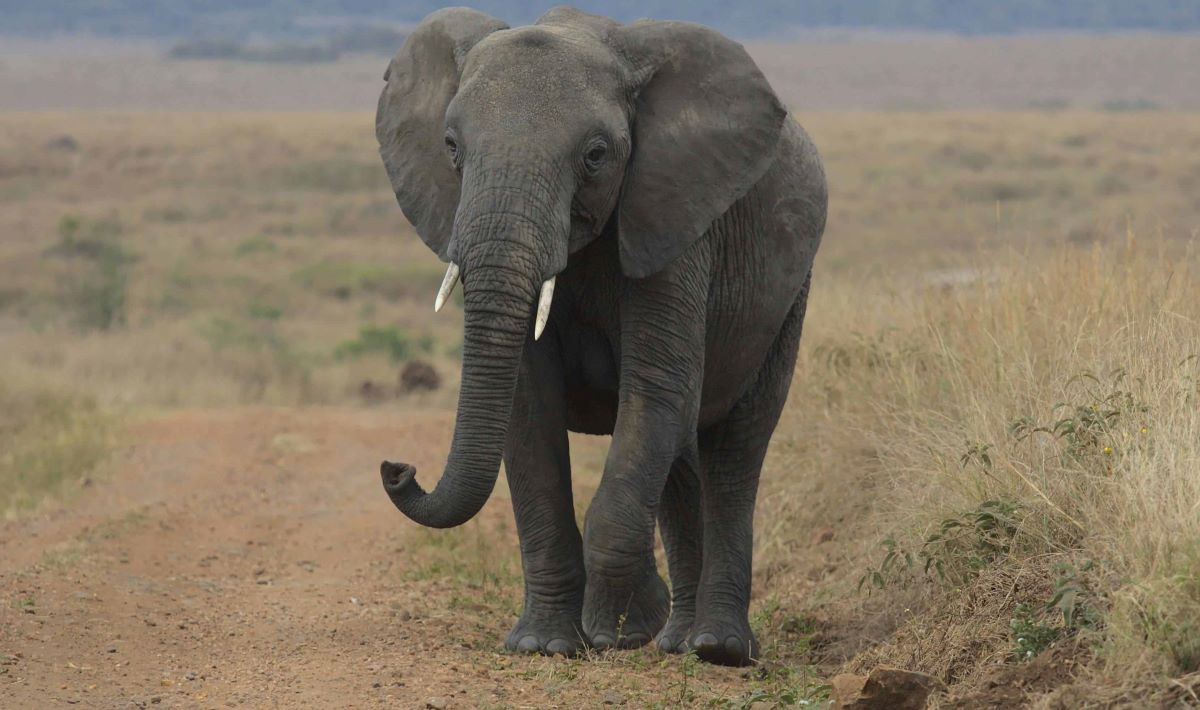
Photo Courtesy of:
Nirav Shah from Pexels: View Elephant Photos
Elephants are the largest animal on earth, and the largest of these, the African Savanna elephant, can weigh to 15,000 lbs, with males weighing more than females. Despite their large size, they can run quite fast, and are known to roam for many miles per day(to 30) to get food and water. Adult elephants commonly sleep standing, but lie down to sleep when required.
Elephants do keep active for about 18 hours per day. Unlike many wild animals(like Tigers,Lions), elephants tend to live longer(60-70 years common) in the wild, compared to captivity. This could be attributed to the fact, they have few predators given their size.
There are three prominent species now of elephants; African Savanna, African Forest, and Asian Elephants. Of the three, the African Savanna, has the most wrinkly skin, which helps to keep it cool in its' hot environment. The Forest Elephant mostly roams in forest like areas, that is cooler compared to the Sahara areas of Africa. The Asian Elephant is the smallest of the three, and lives in South and Southest Asia. It is distinguishable by smaller ears, and its' smoother and lighter skin coat.
The most notable feature of elephants is their trunk and tusks. Elephant trunks are commonly 6 to 7 feet in length, and can weigh 200 - 300 lbs depending on the species. The trunk is used to get water; to bath themselves, and aids in fetching food, including grass, fruit, plants, and bark. The tusks are used for digging, moving things, and protection of the herd, if required. Tusks can be 8 feet in length and weigh to 100 lbs.
Elephants travel in herds, which is mostly females, but males do join them for a limited time. It is common for males to have their own herd, although they do wander to mate when the age is appropriate. The leader of the females is known as the matriarch, and is usually older and wiser, and she helps the herd navigate and survive their terrain, including making decisions during any threats or conflicts.
All members of the herd contribute to the care of the newest elephant calf. An elephant calf, like a baby giraffe, can stand and walk soon after birth. An elephant calf can weigh to 200lbs when born, and about 3 feet tall.
Elephants are really smart. They have the largest brain of all animals. With their emotional intelligence, they can console and show empathy. They can communicate with their herd from miles away, with infrasound, a low frequency vocalization, not heard by humans. This allows them to be forewarned of danger, and, know where the herd or members of it are traveling. Other elephant acoustics include roars, trumpets, and bellows.
African elephants and Asian elephants are considered an endangered species. There are about 500,000 African elephants and approximately 50,000 Asian elephants.
Homepage